
Dry Needling
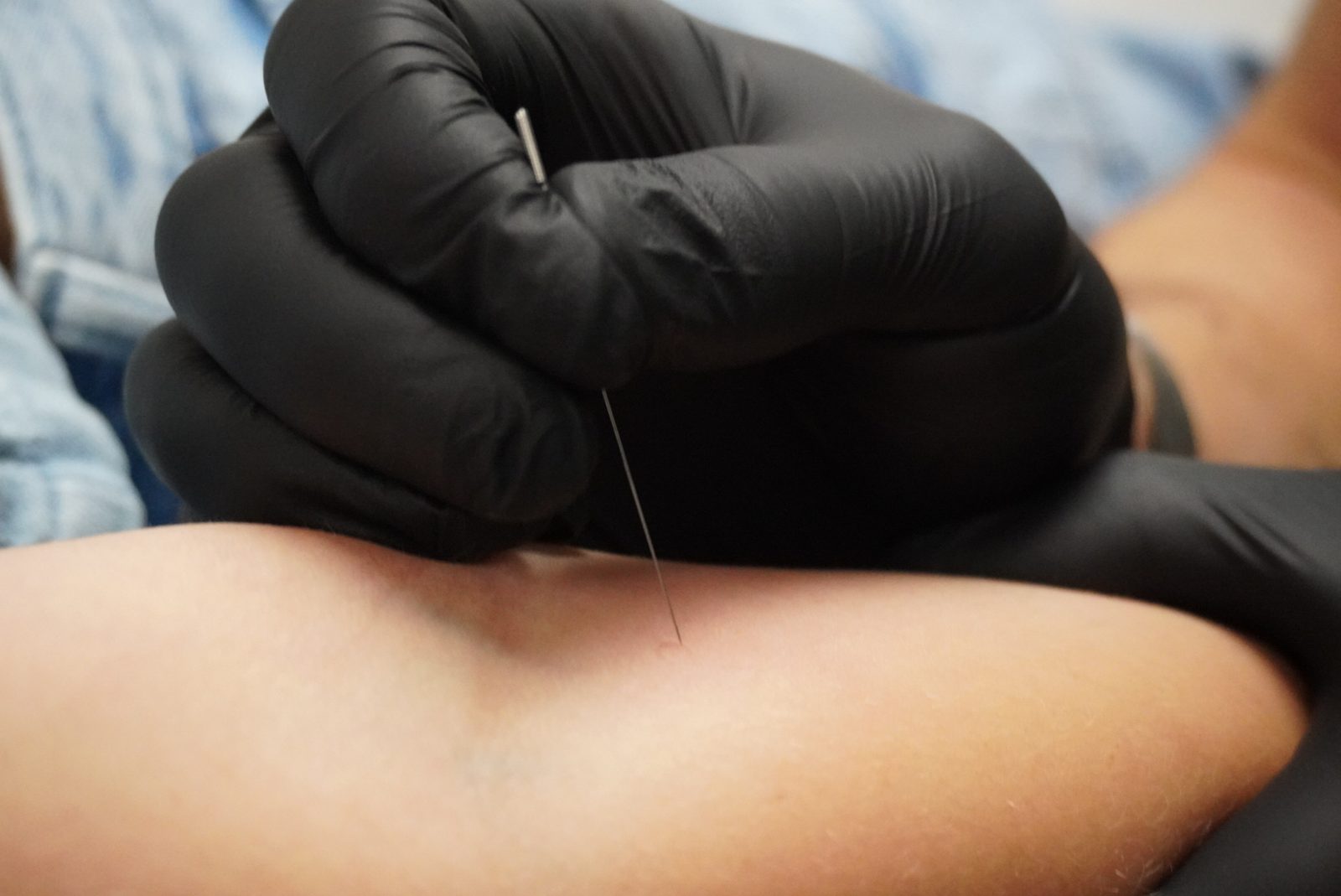
A precise tool for releasing trigger points and chronic muscle tension — most effective when it's paired with a plan to keep them from coming back.
Dry needling uses a thin filament needle inserted directly into a muscle's trigger point — a taut, irritable band of muscle tissue that refers pain, restricts motion, or won't release with stretching alone. The needle creates a local twitch response that helps reset the muscle's resting tension and improve blood flow to the area.
Where dry needling makes the biggest difference
Chronic Muscle Tightness
Persistent tension that hasn't responded to stretching or foam rolling alone.
Active Trigger Points
Taut, irritable bands of muscle that refer pain to other areas.
Tendinopathy
Chronic tendon irritation that benefits from improved local blood flow.
Tension Headaches
Headaches tied to tightness in the neck and upper back.
Sports Overuse
Repetitive strain from running, lifting, or sport-specific movement.
Muscle Spasm
Acute or chronic spasm that hasn't responded to rest or other treatment.
Two techniques, not one
"Dry needling" actually covers two different approaches, and which one gets used depends on what's actually driving your pain. Sessions often use a combination of both.
Trigger Point Needling
Targets a specific taut band of muscle directly — the classic approach for an isolated knot or trigger point.
In-Situ Needling
Works more broadly through the fascia — closer to what fascial manipulation addresses — for pain that isn't isolated to one clear spot.
Why we don't use it alone
Here's the honest version: dry needling is excellent at reducing tension in the moment, but a muscle that's chronically tight is often tight for a reason — it's compensating for something else in the movement chain. Needling that muscle without addressing why it's overworking gives temporary relief that tends to creep back.
That's why dry needling at Valley PT is almost always paired with movement retraining — frequently Postural Restoration® (PRI) concepts or fascial manipulation — so the relief you feel in the session actually holds up once you're back to training, working, or running.
What to Expect
Sessions are quick and targeted, usually built into a broader one-on-one visit rather than standing alone. Most people feel some soreness in the area for a day or so afterward, similar to a hard workout, followed by a noticeable reduction in the tightness or referred pain that brought them in.
Before you book
Does dry needling hurt?
Most people feel a brief muscle twitch or cramp-like sensation when the needle reaches the target tissue, followed by a release. It's generally well tolerated — most patients find it far less uncomfortable than they expected.
Is dry needling the same as acupuncture?
They use similar needles, but the approach is different. Dry needling is based on Western neuromuscular anatomy and targets specific trigger points or fascial restrictions, not the meridian system acupuncture is built around.
What's the difference between trigger point and in-situ needling?
Trigger point needling targets a specific taut band of muscle directly. In-situ needling works more broadly through the fascia, closer to fascial manipulation, for pain that isn't isolated to one clear knot. Which one (or both) we use depends on what the evaluation finds.
Will I be sore afterward?
Mild soreness for a day or so is common, similar to a hard workout. It typically resolves on its own.
How many sessions will I need?
It depends on how long the tightness has been present and what's driving it. Some people feel meaningful relief after one session; chronic issues usually need a few sessions paired with movement retraining to hold.
Dealing with pain coming from muscle or fascia?
We'll find out exactly what's driving it — a trigger point, a fascial restriction, or both — and match the right technique to it.
Schedule Now